Daytime has never shied away from intense, raw storylines, and often led the way in tackling social issues. After all, Agnes Nixon broke new ground all the way back in 1963 when she wrote Daytime’s first cancer storyline with Bert Bauer for “Guiding Light,” at a time when neither soaps nor primetime were tackling such stories. In 1983, Douglas Marland tackled incest on “Loving.” But perhaps the most difficult, harrowing—and, unfortunately, often overused—story twist on soaps is rape.

Susan Haskell as Marty
In a genre primarily targeting women, rape storylines may not always be entertaining, particularly when used as cheap plot devices. However, when handled with sensitivity and impact, their aftermath can educate and enlighten viewers, making rape a powerful story catalyst.
Few rape storylines were as impactful, harrowing, or shocking as Marty Saybrooke’s on “One Life to Live” in 1993. Marty, played by Susan Haskell, was gang raped by three fraternity boys: Todd Manning (played originally by Roger Howarth), Powell Lord III (played by Burt Collins and later by others), and Zach Rosen (played by Tom Bruno). Thoughtfully conceived, written, and executed, it remains one of Daytime’s most complex and compelling stories, unfolding over almost one year, with layers that made it impossible to ignore.Fans still regard it as one of the most memorable storylines ever and have long wondered how it was conceived, why the show took such a bold risk, and whether the network fully supported it.
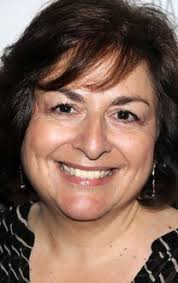
Jean Passanante
I recently had the pleasure to speak with the show’s Associate Head Writer at that time, Jean Passanante (who also wrote for “All My Children,” “As the World Turns,” “Another World,” and “The Young and the Restless”), about this storyline’s conception and execution. She described the care taken to tell it as realistically and sensitively as possible. The lateHead WriterMichael Maloneand Executive ProducerLinda Gottlieb’s original goal was to attract a younger audience by putting younger characters front and center, namely Kevin Buchanan (Kirk Geiger), Joey Buchanan (Chris McKenna), Rachel (Ellen Bethea), and introduce Marty (Susan Haskell).
As Jean explained, “Michael wanted to do something powerful that would involve the entire community. It was unusual because it was done so realistically, more so than other storylines sometimes tend to be done on soaps, and he and Linda really wanted to make it as real as possible.”
That was definitely accomplished! Marty wasn’t exactly a saint in Llanview. She came on as a spoiled, entitled rich girl who schemed and lied her way across town. At one point, she falsely accused Andrew of coming onto her physically. She didn’t have much credibility. So, when she came forward with the rape, no one believed her in the beginning. After all, she had lied before and accused people of things they didn’t do. Why would this time be any different?
“The storyline was originally titled, ‘The Girl Who Cried Rape,’” said Passanante. “There were so many facets to the story that made it compelling. Marty had dated Todd once. There was also that night in Rodi’s bar when Marty was drunk and misbehaving with Todd and others. Everyone was taunting her to take off her bra and things like that. So, all of that had already made her less reliable.”
The other shocking and brave element was Marty being gang-raped by threefrat boys at the Spring Fling college party. Cinematically produced by Linda Gottlieb (who came from film and produced the Eighties’mega-hit “Dirty Dancing”), the sequence prioritized realism, using Marty’s point of view, rapid cuts, and a shaky-cam style, techniques rarely seen on soaps at the time.
As Passanante explained, “We had social workers advising us because we wanted to get it right from the victim’s perspective. Marty was visualizing objects, such as a music box, and other things in the room to distract herself from what was happening because it was too much to be in the moment. This is pretty common with victims in those types of situations. It was done meticulously.”
The aftermath was equally meticulous. We saw Marty examined by a doctor almost immediately with her facial expressions conveying the discomfort and trauma. Her fear was palpable when asked about STD testing.She went from someone who was ridiculed and not taken seriously to someone we felt sorry for. And she was immediately thrust in the center of the show’s main story.
The storyline also gave Kevin an important role in the story since Marty had originally accused him of being part of the group of guys who raped her. (That wasn’t a false accusation; she was too drunk to remember that while he was there in the beginning, he had left by the time she was attacked).
“It posed many interesting angles,” explained Passanante. “Would people believe Kevin or Marty? He was also dating Nora’s daughter, Rachel, and Nora was the defense attorney, which further complicated things.”
Was the story executed as planned? Passanante admittedthat it changed along the way, as many stories often do.
“We originally imagined that one of the other frat boys (Powell) could be redeemed since he was related to the Lords, but Roger Howarth’s Todd just stood out so much,” said Passanante. “Todd was so arrogant, and it seemed like the jury was going to be in his corner. Nora realized halfway through that they were guilty. So, she basically sabotaged the trial.”
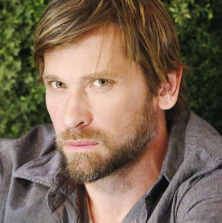
Roger Howarth as Todd
Redeeming Todd (known originally as only “Frat Boy #1”) was controversial, but as with Luke and Anthony Geary on “General Hospital,” Roger Howarth was so powerful that viewers rooted for him. He deservedly won an Emmy for those courtroom scenes, and his popularity helped drive the decision to redeem Todd and make him Viki’s brother, tying him to the show’s core family. This paved the way for years of compelling Todd stories and relationships.
As for network support, Passanante admitted that it took quite a bit of convincing to get ABC on board, and that it was Linda Gottlieb who really fought for the story. “OLTL”had a history of bold storytelling, but by the late Eighties, its turn toward fantastical camp had alienated viewers. (Eterna, Mendora, timetravel, etc). Gottlieb successfully convinced ABC that restoring the show’s social-issue roots in a fresh, contemporary way would bring back viewers. And, boy did she deliver! Her first major story, Billy Douglas’ coming-out storyline the year prior, was equally compelling.By early-1993, the show had risen from eighth to third place in the ratings.
Marty’s rape illustrated that when handled meaningfully, sensitively, and with an informational purpose, rape can be an effective storytelling tool.Along with excellent casting, acting, writing, and production values, this was a rape storyline that had viewers glued to the screen every day.

Marty’s rape was a brilliant storyline!