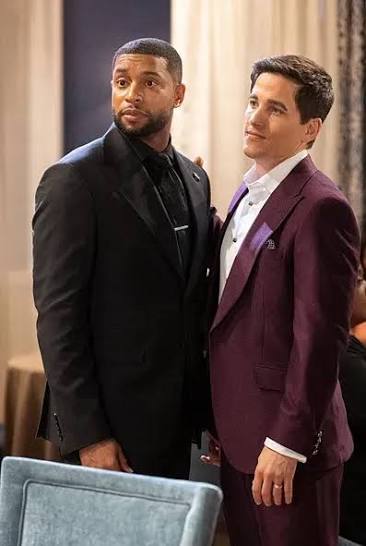
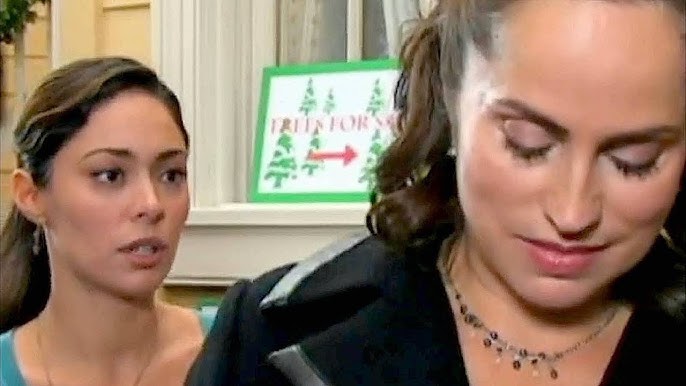
Brandon Clayborn (left) and Mike Manning in “Beyond the Gates”
It’s no secret that soap operas have long enjoyed a devoted LGBTQ+ following. Even before gay characters became part of the daytime landscape, many gay viewers were drawn to the genre’s emotionally rich storytelling, larger-than-life characters, and delightfully over-the-top drama. What was it about soaps that resonated so deeply with this audience? How has the genre evolved to embrace LGBTQ+ viewers and tell their stories? And, what does the future hold for gay characters in daytime television?
There are several reasons why soaps appeal to the LGBTQ+ community:
Emotional storytelling: Serials center on relationships, family conflict, romance, betrayal, and personal identity. Many viewers who enjoy emotionally driven narratives—regardless of sexual orientation—find this compelling.
Themes of secrecy and identity: For decades, many LGBTQ+ people experienced aspects of their lives as hidden or socially constrained. Soap storylines about secret relationships, double lives, rejection, and eventual acceptance often resonated in ways that were not necessarily intended by the writers.
Camp appeal: Many soaps embrace heightened drama, extravagant fashion, dramatic confrontations, and larger-than-life performances. This aligns with an appreciation of “camp,” an aesthetic that has long been influential in many LGBTQ+ communities.
Strong female characters: Soap operas have traditionally featured complex, powerful women whose stories drive the narrative. Research on media audiences has found that many gay men identify with or admire these characters, much as other audiences do with heroes to which they can relate.
Representation before mainstream TV caught up: Daytime soaps were among the earlier television genres to introduce recurring gay characters and same-sex romances, even if progress was uneven. “All My Children,” “As the World Turns,” and “One Life to Live” featured LGBTQ+ storylines years before many primetime programs did.
Shared viewing culture: Historically, soap operas built loyal fan communities that discussed plots, characters, and relationships in detail. LGBTQ+ communities have often created strong fan cultures around media, making soaps a natural fit.
Although soap operas in the 1950s, 1960s, and 1970s featured overwhelmingly white, heterosexual characters, networks gradually came to recognize that LGBTQ+ viewers made up a meaningful segment of their audience—and represented valuable consumers for advertisers. At the same time, many writers sought to create a more authentic reflection of American life. As soaps began introducing more diverse characters and storylines, they also took their first tentative steps toward LGBTQ+ representation. Progress, however, was slow, cautious, and often marked by hesitation.
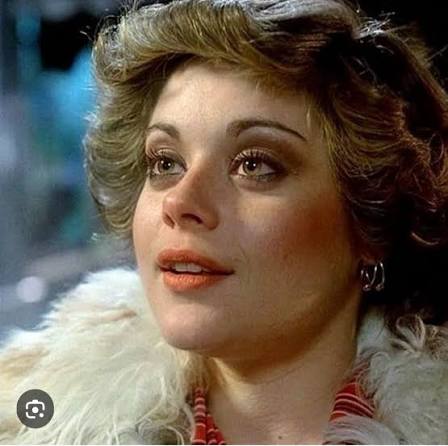
Donna Pescow as Dr. Lynn on “AMC”
The first hint at a possible homosexual storyline occurred on “Y&R” in 1977 in a storyline involving Katherine Chancellor (the great Jeanne Cooper) and a woman named Joann Curtis (Kay Heberle). Katherine had recently been widowed after the death of Phillip Chancellor II and was lonely, depressed, and struggling with alcoholism. Joann was also going through marital problems and moved in with Katherine for companionship. As the women grew closer, the show began hinting that Katherine’s feelings for Joann might be becoming romantic. Unfortunately, that’s about as far as it got, and Joann disappeared. Supposedly, audience reaction was negative, and CBS mandated that the storyline be dropped.
“AMC” also touched on a brief lesbian storyline in 1983 that involved Devon McFadden (played by Tricia Pursley), a young divorcée who had been unlucky in love with men, and Dr. Lynn Carson (played by Donna Pescow), Devon’s psychiatrist. Devon developed a close emotional bond with Lynn during therapy. Lynn eventually disclosed that she was a lesbian. Devon, frustrated by her relationships with men and feeling deeply attached to Lynn, began to think she might be in love with her therapist. Devon confessed her feelings and suggested they could have a romantic relationship, but Lynn gently rejected her because, as she explained, she wasn’t actually a lesbian—she was experiencing transference, a psychological phenomenon in which a patient projects intense emotional or romantic feelings onto a therapist. Lynn told Devon that sexual orientation isn’t something a person simply chooses because heterosexual relationships have been disappointing. While so much more could have been explored here (the storyline lasted only a few months), it was very progressive for its time because rather than portraying lesbianism as a “phase” or a cure for bad experiences with men, the show had its lesbian character explicitly reject that idea. It also laid the groundwork for “AMC”’s future gay storylines: Michael Delaney / Kevin Sheffield in 1995, and Bianca’s coming out in 2000.
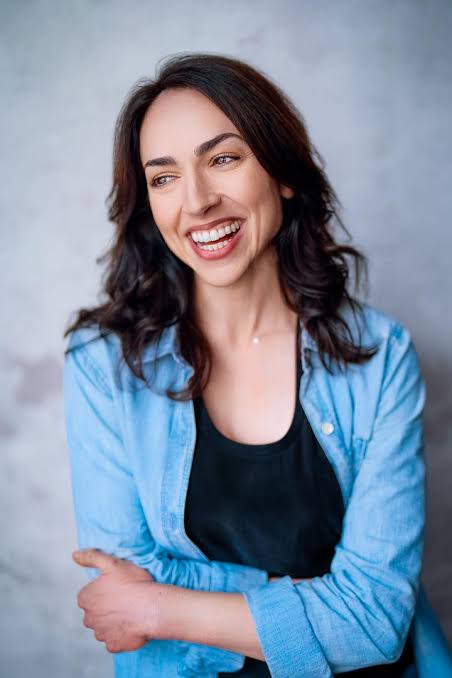
Eden Riegel as Bianca on “AMC”
Having the daughter of a soap’s leading lady, who just happened to be Erica Kane nonetheless, was arguably the most defining LGBTQ+ storyline in soap history. Erica initially rejected the news, believing it was a phase or something she could “fix,” but over many months she came to fully accept her daughter. The story was praised for its realism and emotional depth and made Bianca (Eden Riegel) one of television’s first lesbian lead characters. She also had realistic relationships, first with Lena Kundera (Olga Sosnovska), then with Maggie Stone (Elizabeth Hendrickson), and then with Reese Williams (Tamara Braun). Bianca and Maggie reached super couple status, and they had the first lesbian love scene (handled very tastefully) on a soap.
Another groundbreaking milestone came with the introduction of Hank Eliot on “ATWT” in 1987. Portrayed by Brian Starcher, Hank was one of the first openly gay characters on daytime television to be depicted with empathy and dignity rather than as a villain or a comic stereotype. His story centered on his longtime partner, Charles, who was dying of AIDS at the height of the epidemic. Rather than sensationalizing the crisis, the storyline focused on love, commitment, and the devastating human toll of AIDS, culminating in Hank’s decision to leave town to care for Charles during his final days. While this narrative may seem understated by today’s standards, it was groundbreaking for its time, offering audiences a compassionate portrayal of a gay relationship during a period marked by widespread fear and stigma. The story also held deep personal significance for headwriter Douglas Marland, whose own experiences informed its creation.
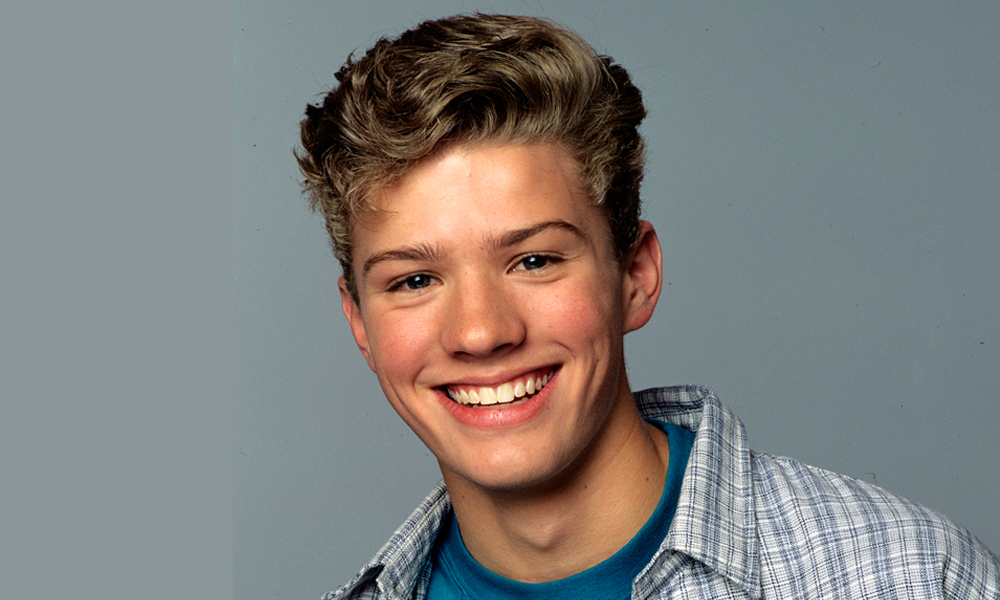
Ryan Phillipe as Billy Douglas
Another highly impactful storyline came in 1992 with “OLTL”’s dramatization of the story of Billy Douglas, a high school student (portrayed by a young Ryan Phillippe) who knew he was gay but was terrified to tell anyone. One of the storyline’s most memorable moments occurred when Billy came out to Joey Buchanan. Although Joey was initially shocked, he ultimately reassured Billy that their friendship had not changed—a simple yet powerful message for daytime television audiences in 1992. As Billy struggled to accept himself, he found guidance and support from Andrew Carpenter, an Episcopal priest known for his compassion and understanding. Unlike many earlier LGBTQ+ storylines, this was not treated as a one-week “special issue.” Instead, it unfolded over several months, exploring the perspectives of Billy, his family, his friends, the church, and the broader community. The story also thoughtfully connected homophobia with the AIDS crisis, presenting both issues with honesty and humanity rather than sensationalism. One of its most moving moments was the episode centered on the AIDS Memorial Quilt, which underscored the profound personal and communal impact of the epidemic.
(Connie Passalacqua Hayman’s coverage of the AIDS Memorial Quilt and this “OLTL” story for USA Today and The Los Angeles Times earned a GLAAD Media Award. Check it out here on our site. Looking Back: The AIDS Quilt Comes to OLTL in 1992.)
“Guiding Light”‘s Otalia was Jessica Leccia (left) and Crystal Chappell
All of these groundbreaking storylines laid the foundation for the modern era of LGBTQ+ representation on daytime television. They paved the way for characters such as Luke Snyder (Van Hansis) on “ATWT,” one of the first openly gay teenagers on a daytime soap, whose relationship with Noah Mayer (Jake Silbermann) became one of soap’s most celebrated romances. They also opened the door for “GL”’s Olivia Spencer (Crystal Chappell) and Natalia Aitoro (Jessica Leccia), whose relationship—affectionately dubbed “Otalia” by fans—became a cultural phenomenon in 2008. Building on that legacy, “DAYS” introduced Will Horton (Chandler Massey), whose coming-out journey and eventual marriage to Sonny Kiriakis (Freddie Smith) helped further normalize LGBTQ+ families on daytime television. Their wedding marked the first marriage between two male characters on a U.S. daytime soap, representing another historic milestone in the genre’s ongoing evolution.
Currently, Deke (Harrison Cone) and Remy (Christian Weissmann) are really heating things up on “B&B” in more ways than one! The relationship is layered, complex, and multi-faceted as Remy tries to move on from his criminal past, and Deke struggles with trust issues while remaining by his side every step of the way.
Our newest soap, “Beyond the Gates,” has a prominent gay couple in Congressman Martin Richardson (Brandon Clayborn), and his husband, Bradley Smith (Mike Manning). Bradley is a former political reporter who took on the role of a stay-at-home, hands-on dad to raise their family. The couple shares two children, Samantha and Tyrell. Their inclusion marks a major milestone on daytime television as they are portrayed as a notable interracial, gay married couple.
It is also great to see openly gay actors succeeding in Daytime – and all genres! Among them is the talented Greg Rikaart, who started his Daytime career as brilliant computer hacker and reformed troublemaker Kevin Fisher on “Y&R,” and now plays Leo Stark – an out and proud gay character — on “DAYS.” Leo has been heavily involved in high-stakes blackmail, the “Baby Jude” kidnapping scandal, and explosive romances, including his fervent marriage to Javi Hernandez (Jacob Martinez). Rikaart also does a great job co-hosting the online podcast, “Soapy.”
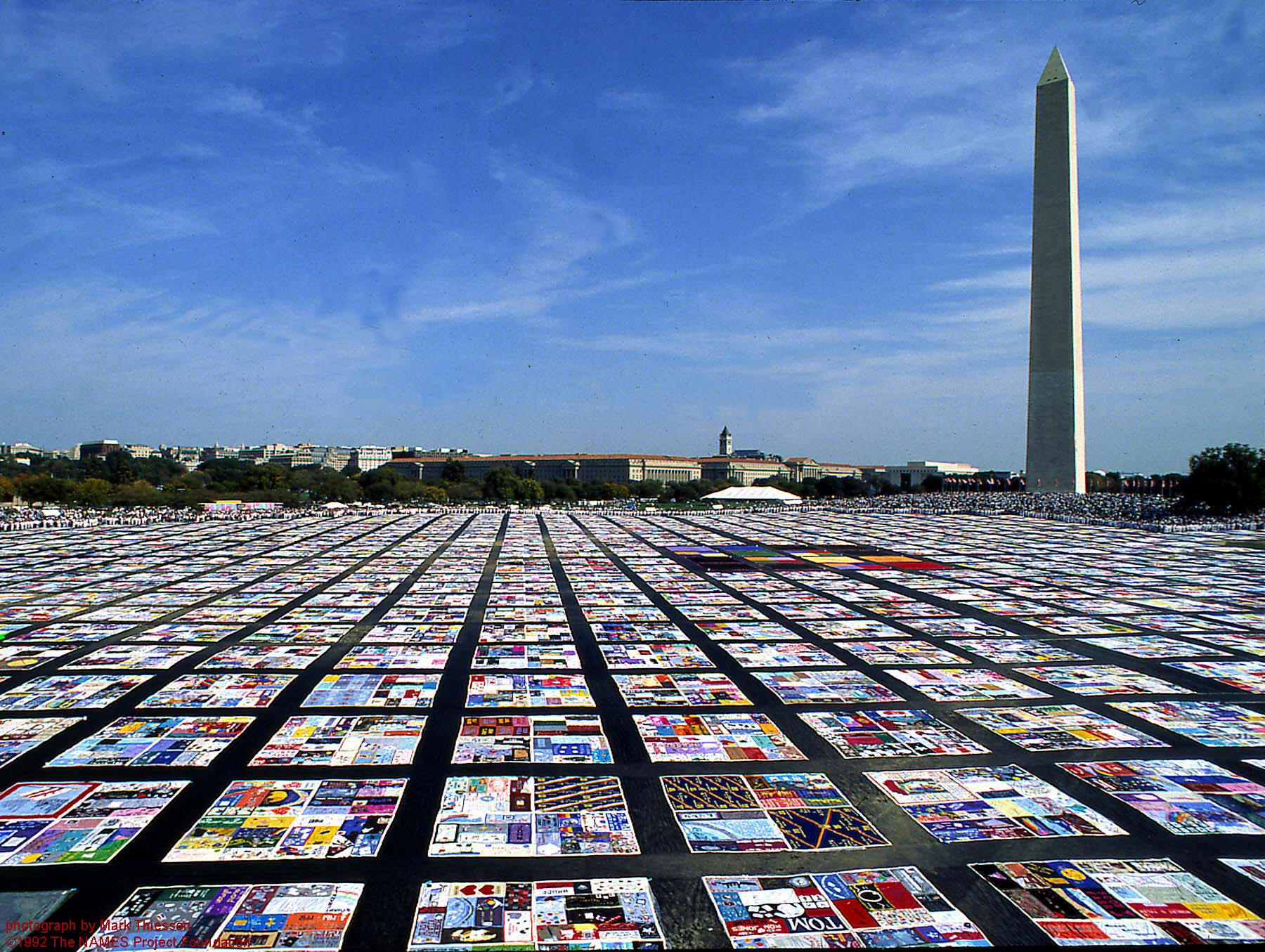
AIDS Memorial Quilt on National Mall
Soaps have truly progressed from breaking the silence in the 1970s–1980s to visibility and acceptance in the 1990s–2000s, and to finally featuring gays realistically in marriage, family, struggles, and careers today. LGBTQ+ viewers have remained loyal throughout. A strong future for LGBTQ+ storylines on soaps is probably one where they are both ordinary and dramatic—in the same way that heterosexual characters have always been. Instead of adding a gay character to simply tell an “issue” story, audiences today expect that the sexual orientation of a character is merely part of who they are, not their entire purpose. Isn’t that the same progression that has occurred in real life?
Ultimately, the hallmark of progress may be when a gay character can be at the center of a classic soap storyline—not because they’re gay, but because they’re a compelling, flawed, lovable character whose relationships and choices keep viewers coming back every day.

I was not a fan at all of Otalia. The coupling made no sense to me because both characters, especially Olivia were involved with multiple men. It made zero sense that Olivia was suddenly a lesbian. GL was really grasping at straws by that point and I tuned out because of that storyline.
Beautiful. As a gay man, I so appreciate this column. I agree with every point, and learned a l9t about past plots.
On behalf of Vince, thanks G.L.!
I relate strongly, and positively, to this guest column, Connie, both as an out & proud lesbian & as a wholly unapologetic soap opera fan. Also, I am one who has so many LGBTQ+ “ships”. “Otalia” was one which was amazing in its international draw & immense popularity. It, of course, not only successfully portrayed a committed “woman loving woman” couple but it celebrated late in life realization of gay feelings & attraction. As we know this is so true to life for some but is rarely shown in media. You could look at Olivia, from the early days of her rape, through so many failed straight romances, then, to the way in which she came to really experience unselfish love with a woman. Natalia, who struggled so because of her Roman Catholic religious concerns, had only one man, really, and mostly was alone. That relationship was so successful dramatically that it spun off into the first successful web soap, VENICE, which continues on to this day. Fans might enjoy knowing that it was Donna Swajeski who was the Script Writer for the graveyard & gazebo scenes. Also that the Executive Producer Ellen Wheeler & one of the co-Headwriters Jill Lori Hurst sat down nightly & read aloud the “Otalia” dialog in an effort to make it perfect. Thanks for this column!
Thanks Donna–I’m glad Vince’s story had impact on. And thanks also for naming industry creators who participated in doing gay stories. I didn’t know “Venice” was still around.
This was such a great article. I feel like I have to add that the All my Children storyiline from 1995-97 was groundbreaking for many reasons–and when I was giving the chance to write about it for my MA disertation, I found out just how long Agnes Nixon had been trying to write a longer gay storyline.
“Venice” has successfully put out 7 seasons & a book “prequel”.
Although the writing since JER on Days has ranged from pretty bad to terrible, the Will coming out story was an exception. While I haven’t really shipped him and his subsequent possible partners since then (little to no romantic chemistry), his understanding he was gay was beautifully done. The masterstroke was involving Marlena, the face of the show and arguably the GOAT of all daytime heroines. Deidre’s Hall warmth in her scenes with Chandler Massey is what all queer kids want when they come out to a trusted, older, loved one in their family.
How interesting! Love your comments on how the understanding character of Dr. Marlena was key to the success of the Will story.